Good steam is the sum of many things: a suitable sauna heater, the right amount of water thrown on the stones, and, of course, high-quality firewood. The choice of wood affects how evenly the heater heats up, how long the heat lingers and what kind of smell fills the sauna room. The best wood choice for a sauna is not based on chance, but a conscious choice that makes the sauna experience truly enjoyable.
In this guide we go through the best types of firewood for a sauna, how moisture affects the combustion, how to chop and stack firewood properly and the basics of storing it. Included is also a list of wood types that should be avoided when heating up a wood-burning sauna heater.
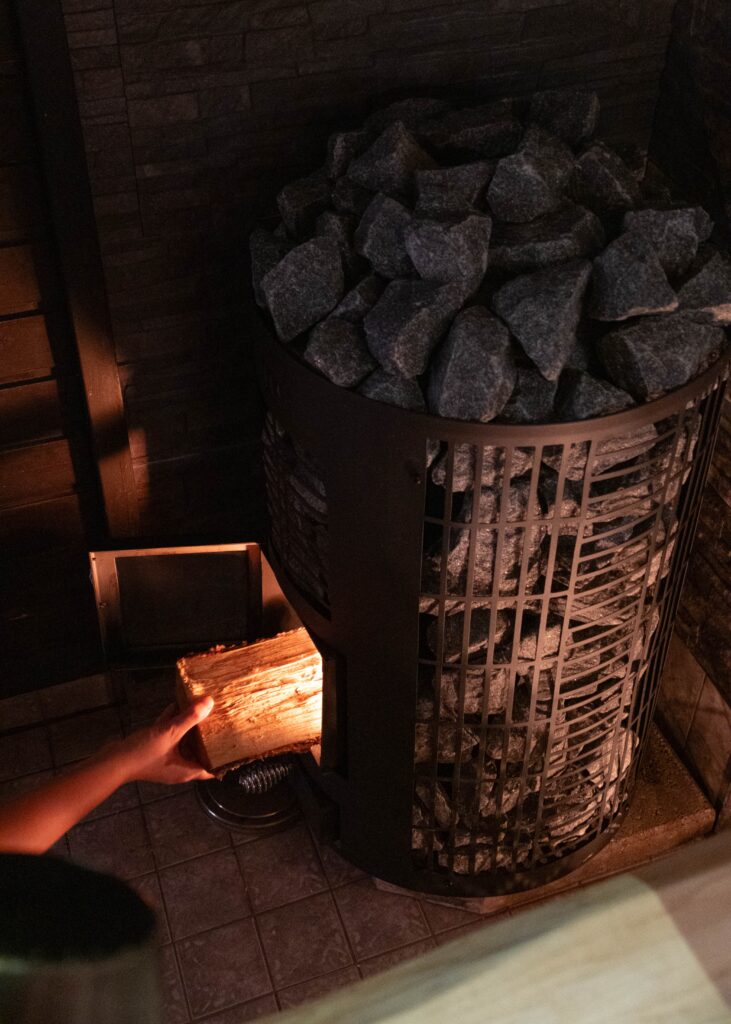
and heats up the sauna stones effectively.
Birch, alder and aspen – the differences between types of wood in a sauna
The type of wood is the first and most important decision when choosing firewood for your sauna. In Finnish sauna culture, birch is the overwhelmingly popular choice, and with good reason: it burns long and evenly and produces a generous amount of heat. Birch bark ignites easily, and the wood leaves only a small amount of ash in the firebox. The mild, natural scent of birch logs is the perfect fit for any sauna room.
Alder is another excellent choice. It burns slightly faster than birch but still produces a good amount of heat and does not give off smoke. Alder is a good choice especially for situations where you want to heat up the sauna quickly, regardless of the heater type. Aspen in turn burns evenly and with almost no smoke, which is why traditionally it has been valued as a sauna firewood. However, aspen’s heating value is lower than birch or alder’s so you will need more of it to achieve the same temperature.
Coniferous woods, such as pine and spruce, burn quickly and generate a great deal of heat, but their resin content can cause sparking and soot buildup. While they can be used as kindling, birch or alder are clearly better choices for actually heating the sauna heater.
Dry or moist wood – why moisture content matters
Using properly dried firewood is one of the most important factors for achieving clean and efficient combustion. Well-dried wood with a moisture content of less than 20% burns efficiently, produces more heat and gives off less smoke than fresh or wet wood. Wet wood consumes a large portion of its energy evaporating water, causing the heater to heat up slowly and produce more smoke.
In practice, the difference can be seen very clearly. The flame from dry wood is bright and even whereas wet wood gives off smoke, sparks and produces more ash. In the long run, using wet wood also increases soot accumulation in the chimney, which impairs the draft and can pose a safety risk. So, in addition to being nicer to use, dry firewood is also safer and more economical.
Firewood size and stacking – how to ensure optimal combustion
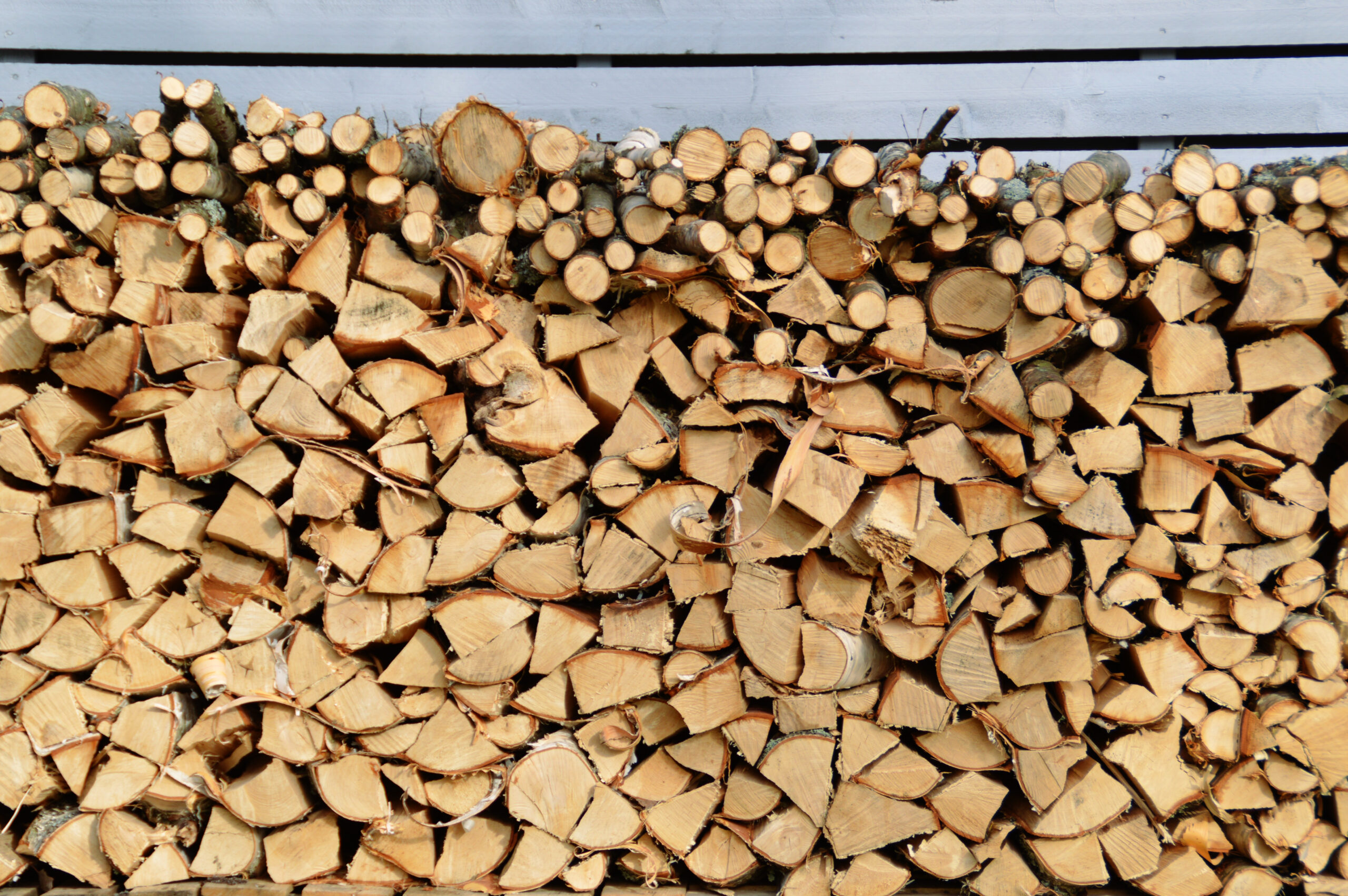
The size of firewood directly affects how evenly the heater heats up. If the wood is too thick, it ignites slowly and burns unevenly while too thin pieces burn so fast that the heater does not have time to store enough heat. A good rule of thumb is to split the logs 25-35 cm long and 8-12 cm in diameter.
Air circulation is the most important aspect of stacking firewood. It is best not to cram too much wood into the sauna heater at once. Instead, you should leave space for the logs to breathe. Start the heating process with thinner chips or smaller kindling logs and add bigger logs as the combustion progresses. This way the firebox has an even and hot column of fire that heats up the sauna stones effectively. When you add firewood at regular intervals rather than putting in too much at once, the heat remains steady throughout the entire sauna session.
Storing and drying firewood at home
Good firewood starts with proper storage. Fresh wood needs at least one, preferably two years to dry out before it is ready to be used in a sauna. Storing works best under a shelter or in a woodshed where air can circulate freely around the woodpile. It is best to pile the wood so that the base is off the ground so that moisture cannot reach the wood from the ground.
If you store the firewood outside, it is best to cover the top to protect it from rain but leave the sides open to ensure proper ventilation. You can bring a smaller batch of wood indoors, like a garage or storage room, to finish drying just before use. Well-dried wood shows visible cracks on the end grain and feels light relative to its size. These are signs that the wood is ready for the sauna heater.
Wood types that should not be used in a sauna
Not all wood is suitable to use in a sauna, and some types of wood can be downright harmful. During combustion, painted, saturated or otherwise treated wood releases poisonous gases that can be dangerous in a closed sauna room. This type of wood should not be used to heat up the sauna in any situation.
Wet or moldy wood should also not be used. Moldy wood gives off a lot of smoke and can release unpleasant smells and harmful compounds while it burns. Small quantities of coniferous wood, such as spruce and pine, can be used as kindling but their resin causes sooting and sparks, which makes them unsuitable as the primary fuel for the sauna. The combustion properties of tropical wood types are often unknown and using them to heat up a sauna is not recommended.
When you choose the firewood with care, you make sure that you get good steam in addition to making sure your sauna heater will last for a long time. Mondex wood-burning sauna heaters are designed for reliable performance and authentic sauna bathing enjoyment. Our range includes wood-burning heaters for both small cottage saunas and larger sauna spaces.